
In modern industrial manufacturing, precision, speed, and consistency are essential for producing high-quality products, and the role of Urethane Dispensing Equipment has become increasingly important as industry-leading technology for advanced urethane mixing applications. From automotive components to aerospace systems, electronics protection, and construction materials, these systems ensure accurate chemical mixing, efficient processing, and reliable performance in demanding production environments.
What is Urethane Dispensing Equipment?
What defines urethane dispensing equipment in modern manufacturing technology? It is a highly specialized system designed to measure, mix, and dispense polyurethane components with extreme precision. These systems are engineered to handle multiple chemical streams that must be combined in exact ratios to produce a consistent and reliable material.
Polyurethane is widely used because of its durability, flexibility, and resistance to wear and environmental conditions. However, its performance depends heavily on precise mixing. Even small errors in ratio or processing conditions can affect the final product’s strength and reliability. Dispensing equipment eliminates these risks by automating and controlling the entire mixing process.
How Does Industry-Leading Urethane Mixing Technology Work?
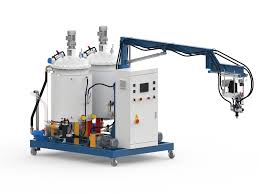
How does advanced urethane mixing technology ensure precision and consistency? The process begins with raw polyurethane components stored in separate tanks under controlled environmental conditions.
These materials are delivered through high-precision pumps that regulate flow rates based on programmed settings. The components are then introduced into a mixing chamber where pressure, temperature, and ratio are carefully controlled.
Once properly mixed, the urethane is dispensed through a specialized application head onto molds, surfaces, or production lines. Sensors continuously monitor system performance, ensuring real-time adjustments for optimal accuracy.
This fully controlled process ensures that every batch of material is identical, supporting consistent production results across large-scale operations.
Why Precision is Critical in Urethane Mixing?
Why is precision so essential in urethane mixing applications? The chemical reaction between polyurethane components requires exact proportions to achieve the desired mechanical and physical properties.
If the ratio is incorrect, it can result in defects such as weak bonding, uneven texture, poor curing, or reduced durability. In industries such as automotive manufacturing, aerospace engineering, and electronics production, such defects can lead to serious performance failures.
Precision ensures that every product meets strict quality standards, improves durability, and reduces material waste during production.
Key Features of Industry-Leading Dispensing Equipment?
What makes modern urethane dispensing equipment industry-leading technology? Several advanced engineering features contribute to its performance and reliability.
High-precision metering systems ensure exact control of material flow. Advanced mixing heads provide uniform blending of components under controlled conditions. Temperature regulation systems maintain optimal chemical stability throughout the process.
Smart control interfaces allow operators to adjust parameters such as flow rate, ratio, and dispensing speed with ease. Real-time monitoring sensors continuously track pressure, viscosity, and system performance, ensuring consistent output quality.
These features work together to deliver highly accurate and efficient urethane mixing operations.
Where is Urethane Dispensing Technology Used?
Where is this advanced technology applied across industries? Urethane dispensing equipment is used in a wide range of sectors due to the versatility of polyurethane materials.
In automotive manufacturing, it is used for sealing, gasketing, vibration damping, and structural reinforcement. Aerospace industries rely on it for lightweight components, insulation systems, and high-performance structural parts.
Electronics manufacturers use urethane systems for potting and encapsulation to protect sensitive components from moisture, heat, and vibration. Construction industries apply polyurethane for insulation panels, adhesives, and waterproof coatings.
Marine and defense industries also benefit from urethane mixing technology in high-strength, corrosion-resistant applications.
How Technology Improves Urethane Mixing Efficiency?
How does modern technology enhance the efficiency of urethane mixing systems? Automation plays a major role in improving both speed and accuracy.
Once production parameters are set, the system operates automatically with minimal human intervention. This reduces errors and ensures consistent output across production cycles.
Advanced control systems allow quick adjustments in real time, enabling manufacturers to switch between different production requirements without downtime. This flexibility significantly improves operational efficiency.
Additionally, automated systems reduce material waste by ensuring precise dispensing quantities, leading to cost savings and improved sustainability.
Benefits of Industry-Leading Dispensing Systems?
What advantages do manufacturers gain from using advanced urethane dispensing equipment? One of the primary benefits is improved product quality through consistent and precise mixing.
Another major advantage is increased production efficiency. Automation enables continuous operation, reducing downtime and increasing output capacity.
Material savings are also significant due to accurate dispensing, which minimizes waste and ensures optimal use of raw materials.
Safety is another important benefit, as automation reduces direct human exposure to reactive chemicals, creating a safer working environment.
Challenges in Urethane Mixing Processes?
What challenges exist in urethane mixing and dispensing systems? Despite advanced technology, several factors must be managed carefully.
Material sensitivity is one of the main challenges, as polyurethane components can react to moisture and temperature variations, affecting performance.
System calibration is critical to ensure accurate mixing ratios. Even minor deviations can result in defective products.
Maintenance is also essential. Mixing heads, pumps, and sensors must be regularly cleaned and inspected to prevent clogging and wear that could reduce efficiency.
Technological Advancements in Dispensing Systems?
How is technology shaping the future of urethane dispensing equipment? Modern systems are increasingly integrated with smart automation and digital monitoring tools.
Artificial intelligence is being used to optimize mixing ratios and dispensing parameters in real time. Predictive maintenance systems help identify potential issues before they occur, reducing downtime.
Advanced sensors provide continuous monitoring of flow rate, pressure, and temperature, ensuring stable and accurate operation.
Energy-efficient designs are also being developed to reduce operational costs while maintaining high performance.
These innovations are transforming urethane dispensing equipment into intelligent manufacturing solutions.
How to Choose the Right Mixing System?
How can manufacturers select the most suitable urethane dispensing equipment for their production needs? The selection depends on production volume, material type, and precision requirements.
High-volume manufacturing requires fully automated systems with advanced control features. Smaller operations may use compact or semi-automated systems depending on flexibility needs.
It is also important to consider system durability, maintenance requirements, and compatibility with existing production lines. Long-term operational efficiency should always be prioritized over initial cost.
Choosing the right system ensures optimal performance, consistent results, and improved return on investment.
Future of Urethane Mixing Technology?
What does the future hold for industry-leading urethane dispensing systems? The industry is moving toward fully connected smart manufacturing environments where machines communicate and optimize performance automatically.
Artificial intelligence, machine learning, and cloud-based monitoring will play a major role in improving accuracy and efficiency. Systems will become more adaptive, adjusting automatically to production conditions.
Sustainability will also be a key focus, with future systems designed to reduce waste, energy consumption, and environmental impact.
As technology continues to evolve, urethane dispensing equipment will become even more advanced and essential for modern industrial production.
Conclusion
In today’s manufacturing landscape, precision and efficiency are essential for producing high-quality polyurethane-based products. Industry-leading urethane dispensing equipment provides the advanced technology required for accurate mixing and reliable performance.
By combining automation, smart control systems, and precise engineering, these systems ensure consistent quality across multiple industries. As innovation continues, they will remain a cornerstone of modern manufacturing, supporting higher productivity, better efficiency, and superior product reliability worldwide.